Disabled Persons Railcard Eligibility Expanded on 30th September 2026
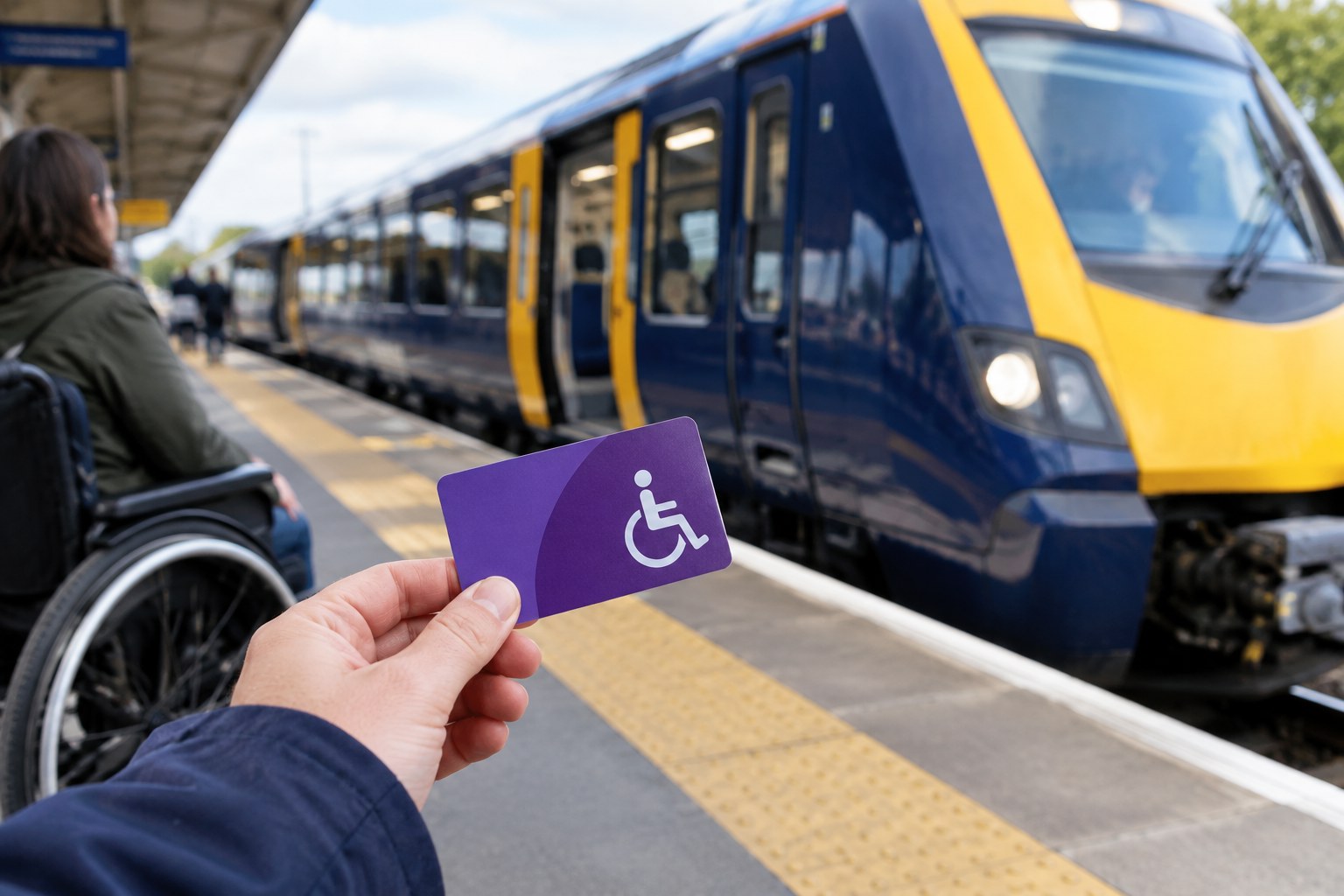
Disabled Persons Railcard eligibility expanded on 30th September 2026, creating a new route for some people with long-term conditions or neurodivergence that significantly affects rail travel. Eligibility depends on the barriers a person experiences and the evidence provided, not simply on a diagnosis.
Table of Contents
The eligibility expansion happened in two phases
Phase 1 · 1st March 2026
The first phase added routes for people who can prove eligibility with existing documents, including a Blue Badge or Disabled Persons Bus Pass, alongside other specified groups.
Phase 2 · 30th September 2026
A further route opened for some people with long-term disabilities, health conditions or neurodivergence that cause significant barriers when using rail services. Evidence from a health or social care professional may be needed.
Both phases have already taken effect. The evidence needed depends on the eligibility route being used.
What changed on 30th September 2026?
The second phase introduced a new eligibility route for people whose long-term disability, health condition or neurodivergence creates significant barriers when using rail services. The key criteria and evidence options are explained below.
Previously, eligibility was based on a list of specific groups of people and the documents accepted to prove them. The new route recognises that some people face substantial travel barriers that are not fully shown by a benefit award or a diagnosis alone. Applications through the new route are assessed independently using evidence from a health or social care professional about the impact on rail travel.

Who may qualify under the new route?
The new route may apply if an impairment, health condition or neurodivergence has lasted, or is expected to last, at least 12 months and significantly affects the person’s ability to use rail services. Applicants need evidence that explains this impact; a diagnosis alone does not guarantee approval.
Could the new criteria apply to me?
- Your impairment, condition or neurodivergence has lasted, or is expected to last, at least 12 months.
- It causes serious difficulties linked to a disability when you use rail services.
- You can supply the evidence required for the way you are applying.
This is a guide to the criteria, not an eligibility decision or a guarantee of approval. Check the current official eligibility guidance before applying.
The guidance includes routes for long-term conditions and long-term neurodivergence. Conditions such as ADHD or autism are not automatic qualifying diagnoses; each application depends on the person’s circumstances and evidence.
Example: describing the impact
Rather than only naming a condition, evidence could explain the specific barriers a person experiences on rail journeys, such as difficulty managing unexpected platform changes, sensory overload in crowded stations or needing support to navigate unfamiliar routes. These are illustrative examples only. Evidence must accurately reflect the individual’s circumstances, and each application is assessed against the Railcard’s criteria.
What evidence might I need?
The evidence required depends on the eligibility route. Existing document-based routes remain available. The new route uses professional evidence to explain how the condition affects rail travel.
Evidence routes compared
Existing route using documents
Depending on the category, evidence may include a benefit award letter, a Blue Badge, a Disabled Persons Bus Pass, a Motability leasing agreement or another document specified in the official list.
New route using professional evidence
You can provide either a report or letter from a health professional explaining how your condition affects your ability to use rail services, or a completed impact declaration form signed by a suitably qualified and regulated health or social care professional.
If you qualify through an existing document-based route, you may not need professional evidence. Check the official list for the documents required for your category.
The current eligibility guidance lists accepted professions for the declaration, including doctors, nurses, occupational therapists, physiotherapists, psychologists and registered social workers, as well as other health or social care professionals who are qualified and registered with the relevant professional body. The professional should explain how the applicant’s needs affect rail travel rather than only confirming a diagnosis.
Is a diagnosis enough?
Not always. A diagnosis alone may not show how a condition affects rail travel, particularly when its impact varies between people. The assessment looks at the difficulties the applicant experiences when using rail services, so a diagnosis neither guarantees nor rules out eligibility.
You do not have to receive a disability benefit to use this new route. You must meet the long-term and rail-impact criteria and provide the required professional evidence. Check the official guidance to choose the correct route for your circumstances.
How much does the Railcard cost and what does it cover?
Railcard price and main benefits
One year
£20
Three years
£54
Main discount
1/3 off
The cardholder and one accompanying adult receive one-third off most rail fares when travelling together for the whole journey. Exclusions and ticket-specific conditions apply, so check the official terms and conditions. The official Railcard website quotes an average annual saving of £132, excluding the cost of the Railcard. Your actual saving depends on your journeys and ticket choices.
You can choose a digital or physical Railcard. Check the official website for the latest purchase options, prices and requirements before applying.
Before you apply: quick checklist
- Check the official eligibility criteria and identify the route that applies to you.
- Gather the evidence required for that route. If using the new route, read the guidance on the professional report or impact declaration form (PDF) before asking a professional to complete it.
- Have a passport-style photo ready for the purchase process.
- Check the latest instructions and prices on the official Railcard website before submitting your application.
This checklist is a preparation aid, not a guarantee of eligibility or approval. Follow the requirements for your specific application route.
How to apply for a Disabled Persons Railcard
- Check the criteria. Read the official eligibility page and choose the route that fits your circumstances.
- Identify the evidence route. Check whether you qualify through an existing document-based route or the new route requiring professional evidence.
- Prepare the documents. Follow the specific guidance for the category you are applying under. The Railcard website also requires proof of eligibility and a passport-style photo when buying online. Do not send extra sensitive information unless it is requested.
- Apply through the official process. Start from the Disabled Persons Railcard website, which also explains postal application options.
- Wait for the assessment outcome. Applications through the new professional-evidence route are reviewed individually. Follow the instructions provided by Railcard staff and check the official guidance for current requirements.
If you already hold a Disabled Persons Railcard, the September change does not mean you need to reapply simply because eligibility has expanded. Check the Railcard’s renewal instructions and conditions when your card is due for renewal.
Frequently asked questions
What changed to Disabled Persons Railcard eligibility on 30th September 2026?
The September change added a professional-evidence route for some people whose long-term condition or neurodivergence significantly affects rail travel. See the eligibility section above for the criteria and evidence options.
Can I get a Disabled Persons Railcard if I have ADHD?
Possibly, if your ADHD significantly affects your ability to use rail services and you meet the new route’s evidence requirements. A diagnosis alone does not guarantee approval. Read the official eligibility guidance.
Can I get a Disabled Persons Railcard if I am autistic?
Possibly, if being autistic significantly affects your ability to use rail services and you meet the evidence requirements. An autism diagnosis alone does not guarantee approval.
Can I get a Disabled Persons Railcard for a long-term mental health condition?
Possibly. The important factors are the effect on your rail travel, the duration of the condition and whether you can provide the evidence required for the route you use.
Can I qualify without receiving disability benefits?
Yes. Receiving a disability benefit is not the only way to qualify. You may be able to use the new professional-evidence route if you meet the long-term and rail-impact criteria described above.
Do I need a medical diagnosis to get a Disabled Persons Railcard?
No, not for every route. Some existing categories are proved through specific documents. Under the new route, evidence must explain how the condition affects rail travel; a diagnosis alone may not be sufficient.
What evidence do I need to apply?
It depends on the route. Existing routes use the documents listed in the official guidance. The new route accepts a health professional’s report or letter explaining the impact on rail travel, or an impact declaration signed by an eligible regulated health or social care professional. See the evidence comparison above for details.
Can my GP write a letter for a Disabled Persons Railcard application?
Yes, if the letter explains how your condition affects your ability to use rail services. Check the official guidance for the information it should include and whether an existing document-based route may suit you better.
Who can sign the impact declaration?
Eligible signatories include doctors, nurses, occupational therapists, physiotherapists, psychologists and registered social workers, as well as other suitably qualified and registered health or social care professionals. Check the current form for the full requirements.
Can I apply if my condition is not visible?
Yes. The assessment focuses on how the condition affects your use of rail services, not whether other people can see it. You still need to meet the criteria and provide the required evidence.
Does the eligibility expansion apply in Scotland?
Yes. The Railcard covers rail travel across Great Britain. Scotland’s bus concession rules are separate from Railcard eligibility, so having one type of bus pass does not automatically mean the same rules apply elsewhere.
Can someone with a Blue Badge get a Disabled Persons Railcard?
Yes. A Blue Badge is an accepted document-based route. Check the official guidance for the required copy of the badge and any conditions that apply.
Can I get a Railcard if I already have a Disabled Persons Bus Pass?
Yes. A Disabled Persons Bus Pass in England, Scotland or Wales is listed as an accepted document-based route. Check the official guidance for the proof required.
How much does a Disabled Persons Railcard cost in 2026?
The current prices are shown in the price cards above. Check the official Railcard page before buying in case they change.
Does a Disabled Persons Railcard give a discount to a companion?
Yes. One accompanying adult can also receive the discount, provided they travel with the cardholder for the whole journey. Fare exclusions and conditions apply.
Can I apply if my condition varies from day to day?
Possibly. Explain how the condition affects your rail journeys, including what changes from day to day. The evidence should describe the practical impact, not just confirm the diagnosis.
What happens if my application is refused?
Check the decision communication and the current official Railcard guidance for the options available in your case. I have not found a sufficiently clear official source confirming a standard appeal process or deadline, so this article does not assume one exists.