
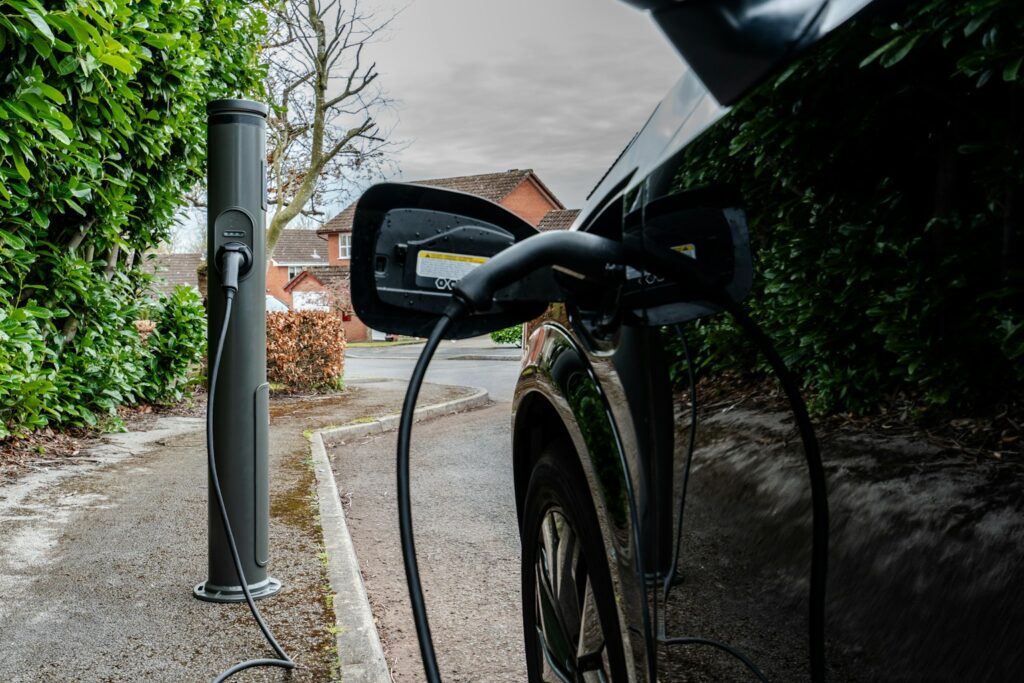
New EV charger planning permission rules in England affect certain pavement channels that let people charge an electric car at home without a driveway. From 21st October 2026, qualifying channels can be installed without a separate planning application, provided the highway authority responsible for the road carries out, arranges or authorises the work.
What has changed with EV charger planning permission?
From 21st October 2026, qualifying pavement channels for home EV charging in England can be installed without a separate planning application. The channel allows a charging cable to pass from a home to an electric car parked on the street. The rule applies when the channel is installed by, on behalf of, or with authorisation from the highway authority responsible for the road. It does not remove the need to check the authority’s process or any other relevant requirements.
Until now, getting planning permission could add time and cost. The government says the change could save drivers up to £300. It may also make it easier for people without a driveway to charge their car using electricity from home, which can be cheaper than public charging.
The change does not allow people to install a pavement channel independently or leave a charging cable trailing across the pavement. The channel must meet the conditions of the new rule, and the highway authority responsible for the road must carry out, arrange or authorise the work.
Who could benefit?
The change may be relevant to people who have an electric car but no driveway or garage. Where they park on the street near their home, an authorised pavement channel may provide a way to connect the car to their home electricity supply rather than relying entirely on public chargers. Whether this is possible depends on the location and the arrangements offered by the highway authority.
The channel sits inside the pavement and gives the charging cable a safer route across it. This helps avoid leaving a loose cable where people walk, reducing the risk of trips and making it easier for people to use the pavement.
The key point
A pavement channel may be an option for some people without a driveway, but availability depends on the location and the highway authority’s arrangements. Check whether an authorised installation route is available for your street.
Which chargers are covered by the change?
The new rule covers installing, changing or replacing a pavement channel for an EV charging cable, where the work is carried out by the authority responsible for the road, on its behalf, or with its approval.
In simple terms, it must be a channel built into the pavement so a cable can safely reach a car parked on the street outside a home. The change does not cover a loose cable or a makeshift cover placed over it.
The new permitted development right does not apply in conservation areas, on scheduled monument sites or within the curtilage (the land associated with) a listed building. If you live in one of these places, ask the local planning authority what rules apply before arranging any work.
Do you still need approval for an EV charger?
Check with your council or highway authority before arranging work. Qualifying pavement channels no longer need a separate planning application, but the authority responsible for the road must carry out, arrange or authorise the installation. It will also need to consider pavement safety and access for pedestrians, including disabled people and people using mobility aids or pushchairs.
Before buying equipment or arranging installation, check the process with your council or highway authority. Ask whether a scheme is available, which installers can carry out the work, whether your street is suitable and what steps you need to follow.
There may be separate requirements relating to highway works, electrical safety, property rights or the charging point itself.
When a channel is no longer needed, the rules require it to be removed and the pavement reinstated to its previous condition as soon as reasonably practicable.
Could you save up to £300?
The government estimates that some drivers could save up to £300 because they may no longer need to pay for a planning application for an installation that meets the rules. This is a possible saving, not a payment or discount everyone will receive. The amount you save will depend on your local arrangements and costs.
The government also says home charging could cost as little as 2p per mile. This is an example, not a price everyone will pay. Your costs depend on your electricity deal, how efficient your car is and how much charging you do at home. You may pay less if you can charge overnight on a cheaper electricity deal.
You may still need public chargers for longer journeys or if a home setup is not possible. The change may make home charging easier for some people, but it will not work for every street or property.
Is this a grant?
No. This change removes the need for a planning application for some pavement channels. It is not a grant and does not pay for the charger, electrical work or installation.
Separate government grants may help some households, tenants, leaseholders or landlords with charger costs. The rules and amounts depend on the scheme. Check the official EV charger grant guidance before relying on financial help.
What about renters and leaseholders?
The change may be useful for renters and leaseholders who park on the street, but it does not automatically give them permission to make changes to their home or guarantee a parking space outside it.
Separately, the government is consulting on ways to make it easier for tenants and leaseholders in England to request an EV charger at a property with off-street parking. The proposals include clearer guidance and possible legal requirements for landlords and freeholders. These are proposals under consultation, not rules currently in force.
If you rent or own a leasehold home, check your agreement and speak to your landlord, freeholder or managing agent before arranging work.
Does this apply across the UK?
This change is for England only. It does not automatically apply in Scotland, Wales or Northern Ireland, where different rules may apply.
If you live in Scotland, Wales or Northern Ireland, check with your local authority what rules and permissions apply before arranging a pavement charging channel. The English planning change does not automatically apply in the devolved nations.
Other EV charging changes being considered
The government has also opened two consultations about possible future changes in England. These are separate from the pavement rule that is already in force. Both close at 11.59pm on 16th December 2026.
1. EV charging in buildings
The government is asking whether new or refurbished buildings in England should have to include EV chargers in covered car parks, and whether current cost limits should change.
2. Charging access for tenants and leaseholders
The government is consulting on whether tenants and leaseholders in England should have a clearer process for requesting an EV charger at a property with off-street parking, including how landlords and freeholders respond to those requests.
The ideas in these consultations are proposals, not rules that are already in force.
What to check before arranging an EV charger
If you park on the street and want to charge your electric car at home, contact your council before buying equipment or booking an installer. Use this checklist:
- Ask whether a scheme is available: find out if your council has an approved way to install a charging channel across the pavement.
- Check your street: ask whether your parking arrangement and pavement are suitable, and which installers or providers the council accepts.
- Check local restrictions: ask about extra rules if you live in a conservation area or near a listed building or scheduled monument.
- Get the full cost in writing: ask what the charger and installation will cost, who looks after the pavement channel and who pays if repairs are needed.
- Check property permissions: if you rent or own a leasehold home, speak to your landlord, freeholder or managing agent if needed.
- Use a qualified installer: make sure the electrical work is carried out safely by a suitable professional.
The change removes one planning step in England, but it does not mean every home can have a pavement charging channel. The council must still approve or arrange the work, and the location must meet the rules.
Frequently asked questions
Do I need EV charger planning permission?
Not for a pavement channel that meets the rules in England, as long as the council carries out the work or approves it.
Can I lay a cable across the pavement myself?
A loose charging cable should not be left running across a public pavement. The change applies to qualifying channels built into the pavement, not cables laid across the path or covered with a temporary mat. Your council or highway authority can explain which options, if any, are authorised locally.
Will every driver save £300?
No. The government says some drivers could save up to £300 in planning costs. It is not a grant or guaranteed payment, and the amount saved will vary.
Does this apply in Scotland?
No. This change applies in England only. Ask your local council about the rules in Scotland, Wales or Northern Ireland.
Can I use the rule in a conservation area or near a listed building?
The new permitted development right does not apply in conservation areas, on scheduled monument sites or within the curtilage (the land associated with) a listed building. Check with your local planning authority if you are unsure.
Can renters use the new rule?
It may help renters who park on the street, but it does not automatically give permission to make changes to a property. The government is consulting on possible separate changes for renters and leaseholders.
Can I still get a grant for an EV charger?
Separate grant schemes may be available for some people. Check the official EV charger grant guidance to see whether you or your landlord qualify.
When do the government consultations close?
Both consultations close at 11.59pm on 16th December 2026. The ideas being discussed are not law unless the government later introduces them.
Official information and sources
Last checked: 22nd October 2026
This article has been checked against the government announcement, the law that introduced the change and the two related consultations.
Department for Transport: EV home charger planning change
The announcement of the planning change, the stated potential saving and the government’s wider home-charging plans.
The Town and Country Planning Order 2026
The law that came into force on 21st October 2026 and explains where the new planning rule applies.
Cross-pavement charging guidance
Department for Transport advice for councils on safe pavement charging channels, approvals and responsibilities.
EV charging in buildings consultation
Proposals on building regulations and charging infrastructure in covered car parks in England.
EV charging access for tenants and leaseholders
Ideas for making it easier for tenants and leaseholders in England to ask to install an EV charger.
Related guides
Electric car mileage tax from 2028
Find out how the planned mileage-based charge could affect electric car running costs.
Household electricity VAT changes
Read about the change to VAT on qualifying household electricity and what it means for domestic energy costs.