Last checked: 7th November 2026.
From 26th November 2026, import tariffs on 101 specified food and agricultural products are scheduled to fall to zero. The government announced the measure in its Budget 2026 cost-of-living package, with the regulations made on 2nd November. The aim is to reduce costs for businesses importing the covered goods, with potential benefits for shoppers.
This guide explains which food products are included, how long the tariff suspensions will last and what the change could mean for supermarket prices. It also looks at the government’s estimated savings and why lower import costs do not automatically mean cheaper food in the shops.
Change at a glance
What the food import tariff changes mean for businesses and shoppers
What changes?
Import tariffs on 101 specified food and agricultural products are scheduled to be reduced to zero from 26th November 2026. This removes the standard import tariff on qualifying goods, not every food import.
Change date
26th November 2026
The temporary tariff suspension is due to remain in place until 31st December 2028.
Where does it apply?
Across the UK, including Scotland, England, Wales and Northern Ireland. Goods originating in Russia or Belarus are excluded.
Who is affected?
Businesses importing, manufacturing or selling the products, and shoppers who may benefit if lower import costs are passed on. Supermarket price reductions are not guaranteed.
What is changing on 26th November?
An import tariff is a charge on certain goods brought into the country from overseas. From 26th November, the standard tariff rate on the 101 qualifying product categories is scheduled to fall to zero.
Before
A qualifying import may attract a customs tariff.
From 26th November
The tariff rate on listed goods is reduced to zero.
Until
31st December 2028, under the current measure.
This can lower costs for businesses importing the covered goods. It does not automatically reduce supermarket prices, and it does not remove VAT or every other charge.
Which food products are included?
The package covers 101 individual food and agricultural product categories. It is not a blanket removal of tariffs on all food imports. The exact products are defined by their customs commodity codes, so the description on a packet or supermarket website will not always be enough to establish whether a particular imported product qualifies.
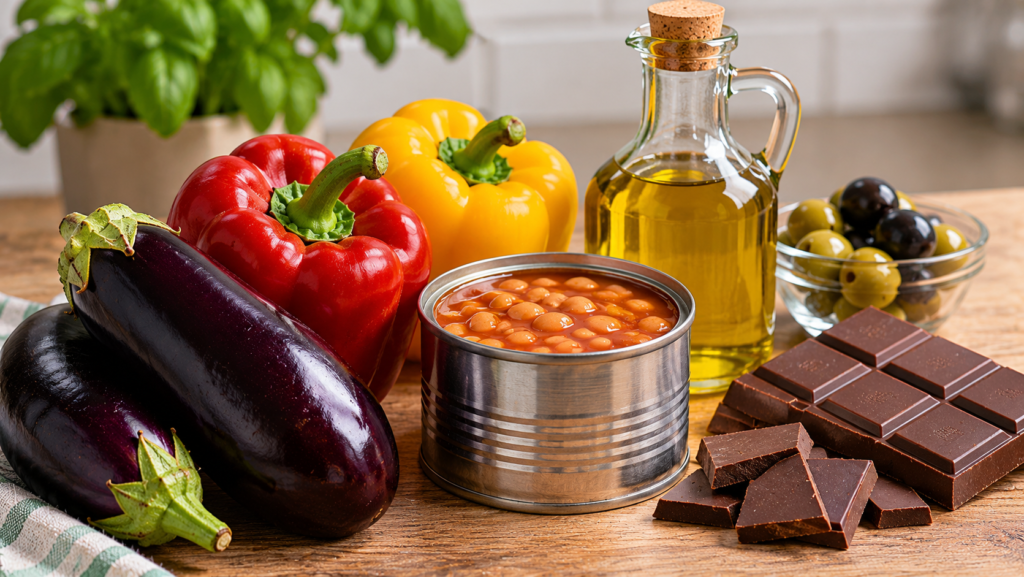
Examples of products included in the government’s published list are:
Baked beans
The government gives a previous standard tariff rate of 16% for baked beans. The suspension reduces the rate to zero for the qualifying commodity codes only.
Aubergines
The previous standard tariff rate for aubergines was 12%. The suspension reduces the rate to zero for the qualifying commodity codes only, not every type of fruit or vegetable.
Chocolate
The previous standard tariff rate for chocolate was 8%. The suspension reduces the rate to zero for the qualifying commodity codes only. Check Annex A for the exact products covered.
Check the full list before assuming a product qualifies
The examples above are not the full list. The tariff suspension applies only to products covered by the specified customs commodity codes. Similar-looking products are not automatically included. The government has published the final list of all 101 qualifying food and agricultural products on GOV.UK. Importers should check the exact product description and commodity code before relying on the suspension.
View the full list of 101 products
The button opens the government’s outcome page. Choose “Final list of goods included in the second cost of living tariff suspensions package” to open the ODT document.
Will food prices fall in supermarkets?
Possibly, but there is no guarantee. Removing a tariff can reduce the cost of importing a qualifying product. Whether shoppers see a lower price depends on what happens further along the supply chain.
Why a shelf price might not change
Transport
Shipping and delivery costs
Production
Ingredients, energy and labour
Retail
Storage, distribution and pricing decisions
The government expects competition between grocery businesses to encourage some savings to reach consumers. Its estimate is a forecast across the market, not a guaranteed reduction in household food bills.
These tariff changes are separate from Scotland’s rules restricting certain food multi-buy offers and supermarket displays. Those restrictions took effect on 1st October 2026. Read our guide to Scotland’s food promotion rules.
What the saving estimate means
£120 million to £185 million a year is the government’s estimated benefit to consumers from this November package. It is not a pot of money paid to households, and it does not mean every shopper will see cheaper prices on 26th November.
Why is the government removing these tariffs?
The government says the suspensions are intended to ease cost-of-living pressure and reduce costs in the food supply chain. Its consultation ran from 27th May to 24th June 2026 and received 103 responses.
Consultation
27th May to 24th June 2026
Responses received
103
Some products were removed from the original proposal after responses raised concerns:
Rusks, toasted bread and biscuits
Excluded following concerns about the impact on UK producers.
Bananas
Excluded after concerns about developing-country trade preferences.
The final list was narrowed after the government considered the potential effects on UK producers, developing countries and other policy priorities.
Does the change apply across the UK?
The regulations extend across the whole UK: Scotland, England, Wales and Northern Ireland.
Countries excluded
Russia and Belarus: goods originating in either country are excluded from these tariff suspensions.
Does removing the tariff mean the food is tax-free?
No. The suspension removes the specified import tariff only. Other taxes and duties may still apply.
Suspended
Specified import tariff
May still apply
VAT and trade remedy duties
It is not a general tax-free status for food. Only the goods identified by the relevant commodity codes qualify.
How long will the tariff suspension last?
Starts
26th November 2026
Scheduled end
31st December 2028
Is this the same as the earlier food tariff change in June 2026?
No. The November changes are a second package, following an earlier set of food tariff suspensions in June 2026.
First package
21st June 2026
Selected products including some fruit, juices, pasta, couscous and tuna.
Second package
26th November 2026
Adds 101 further specified food and agricultural products.
What does this mean for shoppers?
There is no application process or direct payment for shoppers. The change affects the import costs of businesses bringing in qualifying goods. Any effect on supermarket prices depends on whether those businesses pass on some of the savings.
For shoppers
You do not need to apply or do anything. Keep an eye on prices, but do not assume every affected product will become cheaper.
What other tariff changes were announced alongside the food measures?
The November package also includes temporary tariff suspensions on two other types of goods. These are separate from the 101 food and agricultural products, but form part of the government’s wider cost-of-living measures.
Kerosene (heating oil)
Tariff suspended until 31st December 2028
The government says this should help strengthen the heating oil supply chain. It is not a guaranteed discount on household heating oil bills.
Specified fertilisers
Tariff suspended until 31st December 2027
Applies to the fertiliser products listed in the original consultation. The aim is to moderate costs for farmers and support security of supply.
How the government’s savings estimates compare
November package only
£120m–£185m
Estimated annual benefit to consumers from the 101 new food tariff suspensions.
June and November packages combined
£245m–£595m
Estimated annual consumer cost reduction across both food tariff packages.
These are government estimates across the market, not payments to households or guaranteed savings on an individual shopping bill. The June 2026 package covered 135 products.
Information note: This article is general information based on official government material available when checked. It is not financial, legal or import-compliance advice. Businesses importing goods should check the relevant commodity code and current HMRC tariff information before making decisions.
Stay ahead of what’s changing
Get clear updates on important UK changes, key dates and what they mean for you. Sign up to the What’s Changing UK newsletter.