Social Media Ban for Under-16s: UK Rules Expected in Spring 2027
Children under 16 are expected to face new restrictions on social media in spring 2027, as the UK Government plans to stop social media companies from offering their services to under-16s. The exact start date has not yet been confirmed, and the final list of services covered is still being developed.
Change at a glance
Expected from: Spring 2027
Exact date: Not yet confirmed
Where: UK
Who it affects: Children and young people under 16, with separate protections planned for 16- and 17-year-olds
What is changing: Covered social media services will be prevented from offering their services to under-16s, alongside restrictions on certain harmful online features
What parents need to know: The Government has not yet confirmed the exact implementation date or final list of covered services.
Last checked: 29 September 2026
What is changing for under-16s?
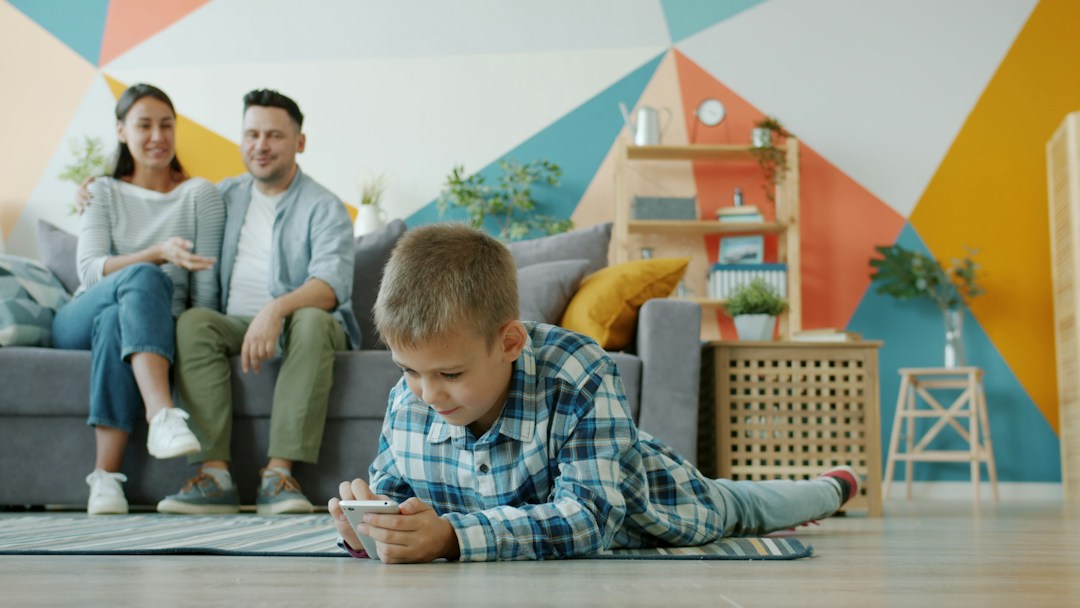
The Government plans to introduce a minimum age of 16 for access to certain social media services. From the start of the new rules, social media companies will not be allowed to offer covered services to children under 16.
This is not intended to stop under-16s using the internet generally. The Government says children will still be able to use online services for learning, news, games and staying in touch with known friends and family through messaging services.
The restriction is aimed specifically at social media services that fall within the Government’s definition. The final legal definition and detailed scope will be set out through regulations.
When will the new social media rules start?
The Government currently expects the first social media restrictions to come into force in spring 2027. The first regulations are expected to be laid before Parliament by the end of 2026.
There is no confirmed day yet. Spring 2027 should therefore be treated as the expected implementation period, not as a date on which parents should expect the rules to begin automatically.
We will update this article when the Government confirms the exact date and publishes the final implementation details.
Which social media platforms will be affected?
The Government says it plans to use a similar model to the one used in Australia. Its current material gives examples including Instagram, YouTube, TikTok, Snapchat, Facebook and X.
That does not mean this is the final legally confirmed list of affected platforms. The Government is still developing the regulations that will define which services fall within the restriction.
The current approach focuses on services designed to enable social interaction where users can post material and where features such as recommendation systems can create particular risks. The final rules will determine exactly which services meet the relevant definition.
Will WhatsApp and other messaging apps be affected?
The Government has specifically said that it does not intend for messaging services such as WhatsApp and Signal to be included in the social media ban.
This is an important distinction. The policy is not intended to cut under-16s off from communicating online with known friends and family through ordinary messaging services.
Messaging services can still have other online-safety requirements, so this does not mean every messaging app will operate without age-related protections. It means the Government’s current social media restriction is not intended to cover services such as WhatsApp and Signal simply because they are used for online communication.
What happens to an under-16’s existing social media account?
This is one of the details that has not yet been fully settled.
The Government has said that, as the regulations are developed, it will provide clearer information about exactly which platforms will be affected, what happens to existing accounts and how age assurance will work in practice.
So parents should not assume that an existing account will automatically be deleted on a particular date. Equally, it would be wrong to say that existing accounts will definitely be allowed to continue. The final arrangements have not yet been confirmed.
Will parental permission allow an under-16 to keep using a covered platform?
The current policy is being designed as a restriction on social media companies offering their services to under-16s, rather than as a system where parents can simply give permission for a child to continue using a covered service.
The Government has also said that responsibility for complying with the new restrictions will sit with the platforms, not with children themselves. It says that, for covered social media services, parents will no longer need to rely on managing parental controls to keep an under-16 from using those services.
The final regulations will need to set out the precise arrangements and any exceptions. At present, there is no confirmed parental-consent exception that parents can rely on.
How will social media companies check a child’s age?
The new restrictions are expected to be backed by stronger age checks. Ofcom has described highly effective age assurance as an important part of implementing the planned under-16 restrictions.
Age assurance can involve different methods depending on the service and circumstances. Existing online-safety rules already use methods such as facial age estimation, photo-ID checks, payment-card checks and third-party identification services for some age-restricted content.
That does not mean every parent or child will necessarily be asked to upload a passport or have a face scan. The Government has not yet published the final system that will apply specifically to the new under-16 social media restriction.
Ofcom is preparing an assessment of how highly effective age checks could be used to determine whether someone is over 16. That work is intended to inform the development and implementation of the new rules.
What about livestreaming and talking to strangers?
The changes go beyond the social media restriction itself.
The Government also plans to prevent under-16s from accessing certain high-risk functions on other online services, including gaming services. The examples given include livestreaming and features that allow strangers to contact children.
This means a service does not necessarily have to be classed as social media for a child-protection restriction to apply. Some specific functions may be restricted because of the risks they create.
What changes for 16- and 17-year-olds?
The Government is not planning to extend the under-16 social media restriction to 16- and 17-year-olds. They will still be able to access social media, but additional protections are planned by default.
For 16- and 17-year-olds, the Government plans to require social media services to:
- restrict access between midnight and 6am by default;
- mute push notifications during those overnight hours;
- switch off autoplay by default; and
- switch off personalised feeds by default.
The Government says 16- and 17-year-olds will be able to change these default settings themselves when they are ready to do so.
Livestreaming and communication with strangers are also planned to be switched off by default for 16- and 17-year-olds on relevant services.
Does this mean under-16s will be banned from the internet?
No. That would be a much broader restriction than the policy the Government has announced.
Under-16s will still be able to use the internet for education, information, games and other online activities that are not covered by the new restrictions. The Government has specifically said children will still be able to use messaging services to stay in touch with known friends and family.
The changes are focused on particular social media services and particular high-risk features, rather than internet access as a whole.
What does this mean for parents?
For most parents, there is nothing they need to apply for at the moment. The rules are being developed and are expected to come into force in spring 2027.
In the meantime, it is worth knowing that the existing online-safety rules are already changing how some services check users’ ages. Parents may therefore see more age-check requests before the new under-16 restrictions arrive.
Once the final regulations and implementation arrangements are published, parents are likely to want to check which services their child uses, whether those services are covered and what alternative ways of communicating or accessing useful content remain available.
The Government also says it will provide further support and guidance for parents and carers, including through its Kids Online Safety Hub.
What is still to be decided?
There are several important details that should not be treated as settled yet.
- The exact day in spring 2027 when the restrictions will start.
- The final legal definition of the social media services covered.
- The final list of services that fall within that definition.
- How existing under-16 accounts will be handled.
- The detailed age-assurance arrangements.
- Any transitional arrangements or exceptions contained in the final regulations.
- The detailed enforcement arrangements.
These details matter because the announcement of the policy is not the same thing as the final regulations coming into force.
What has already changed?
It is also worth separating these future restrictions from online-safety rules that are already in force.
Under the Online Safety Act, some services have already been required to use highly effective age assurance for certain duties relating to children and harmful content. Ofcom’s current guidance explains that age assurance is already an important part of the existing online-safety regime.
The planned under-16 social media restriction is a further step that is expected to use stronger age assurance to determine whether users are over 16.
What happens next?
The Government intends to lay the first regulations before Parliament by the end of 2026. It currently expects the social media restrictions for under-16s to enter into force in spring 2027.
That means there should be more detail before the rules actually start, particularly about the services covered, age checks and what happens to existing accounts.
For parents, the most useful thing for now is to treat spring 2027 as the expected timeframe rather than a fixed date. Once the Government confirms the exact implementation date and final rules, this article will be updated.
Information checked
Last checked: 29 September 2026
This article was checked against current official information, including:
- GOV.UK: Fact sheet – New rules to protect children online, updated 18 September 2026
- GOV.UK: Growing up in the online world – government response, July 2026
- GOV.UK: Growing up in the online world
- Ofcom: Age assurance duties under the Online Safety Act
- Ofcom: Use of Age Assurance Report 2026
This article is general information based on official sources available when it was checked. The planned rules and implementation details may change before spring 2027. It is not legal or regulatory advice about your individual circumstances.